Living with water
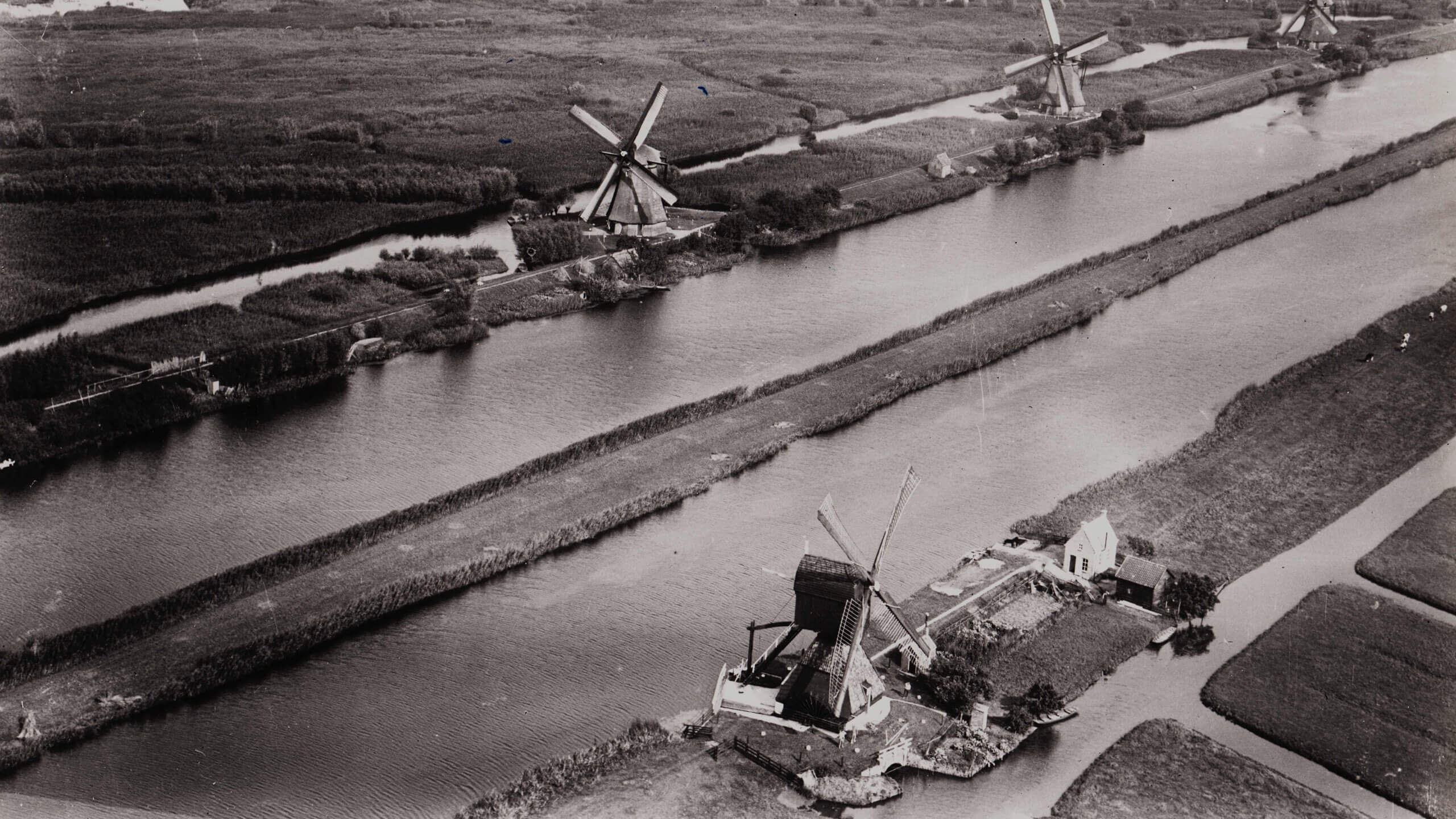
A thousand years ago, Kinderdijk was full of bogs, a place only apparently accessible to hunters and fishermen during the summer months. Nonetheless, the promise of its fertile soil persuaded more and more people to settle here, living on the sand dunes and building dikes.
Unfortunately, the water would continue to triumph over the settlers. That’s why Floris V, a strong local ruler of the time, decided to establish water authorities in the Alblasserwaard region – the first of their kind – and made agreements with the inhabitants of the area about coping with the water. As a result they built sluices, locks, and watercourses to transfer the water to the lowest point: the sluices at Kinderdijk, where all the water was fed into the river. This network of structures became the foundations for a system that still works today.
The iconic windmills
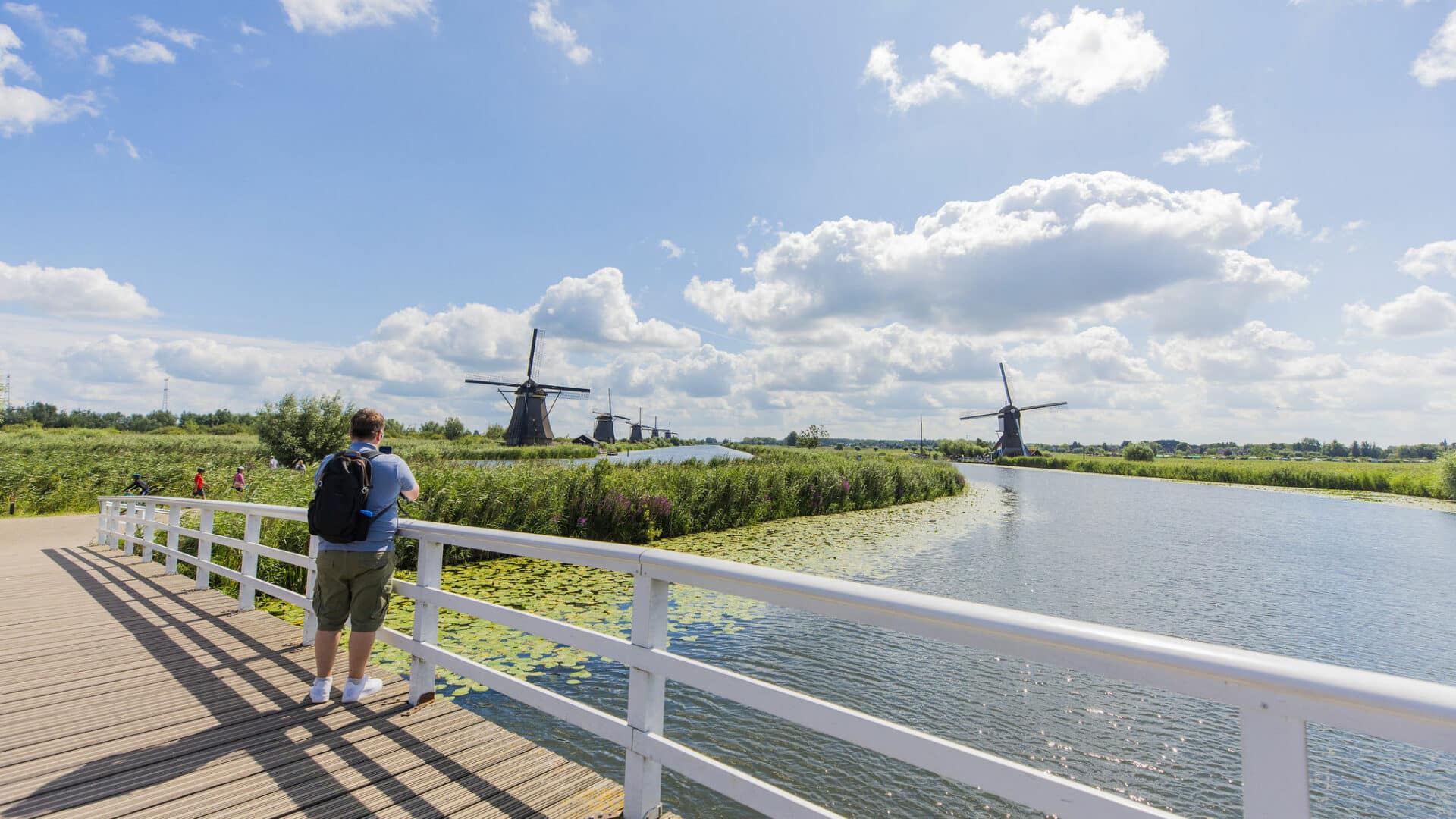
In the centuries that followed, Kinderdijk grew into an innovative but charming landscape. The windmills pumped the water out of the polders using the power of the wind. To achieve their mission, the millers followed the rhythm of the natural world – after all, windmills will only work if it’s windy enough. Many other countries learnt from this water management system and, not surprisingly, the windmill became emblematic of the Netherlands.