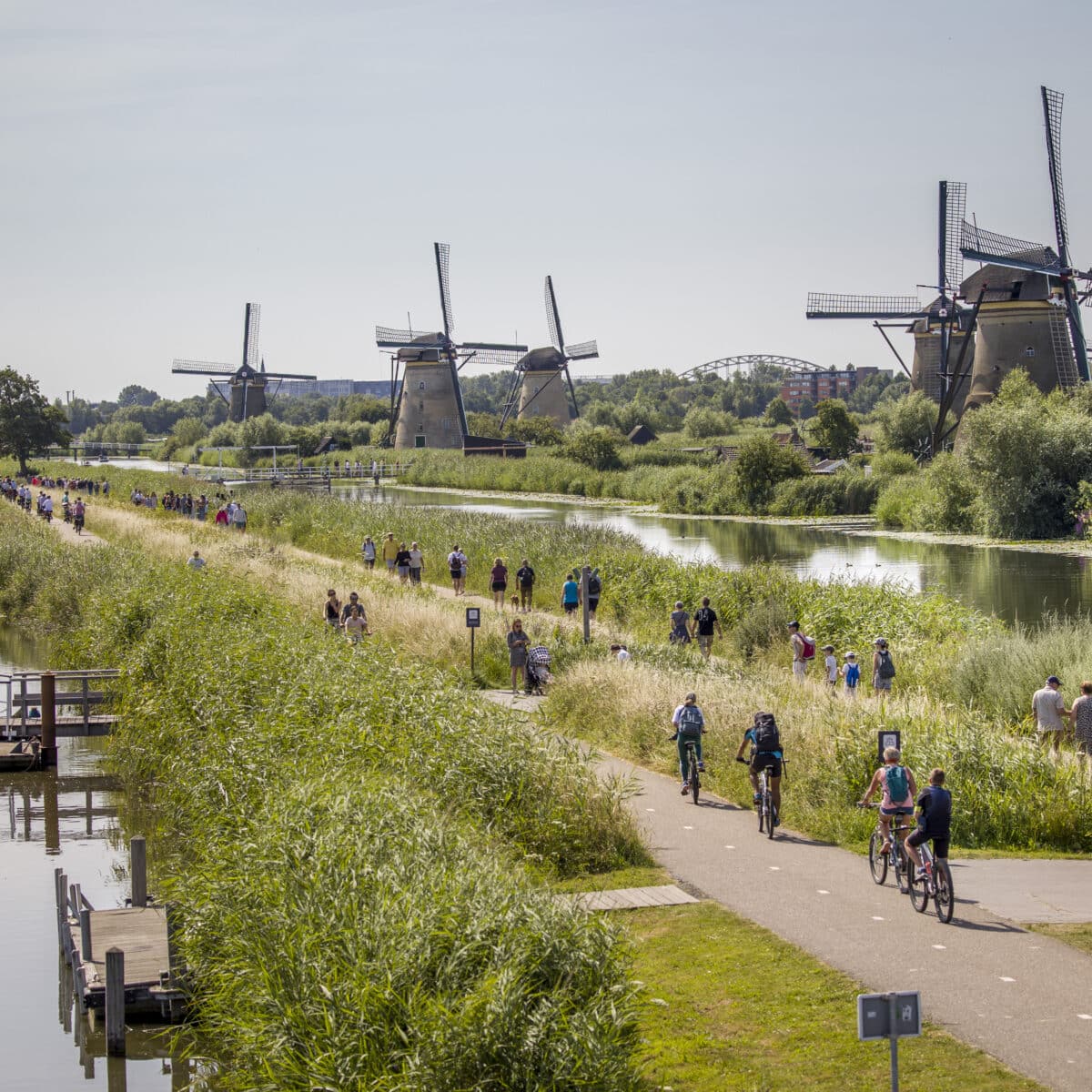
The famous photo of the five windmills in a row in Kinderdijk on a summer day.
The powerhouses of Kinderdijk

Windmills & pumping stations

Nineteen windmills and three pumping stations: in Kinderdijk, you can see the water management system in all its glory. It’s no coincidence that this heritage site is listed as a UNESCO World Heritage Site. On this page, we explain which windmills and pumping stations there are, and what lies behind these historic buildings.

The origins of Kinderdijk

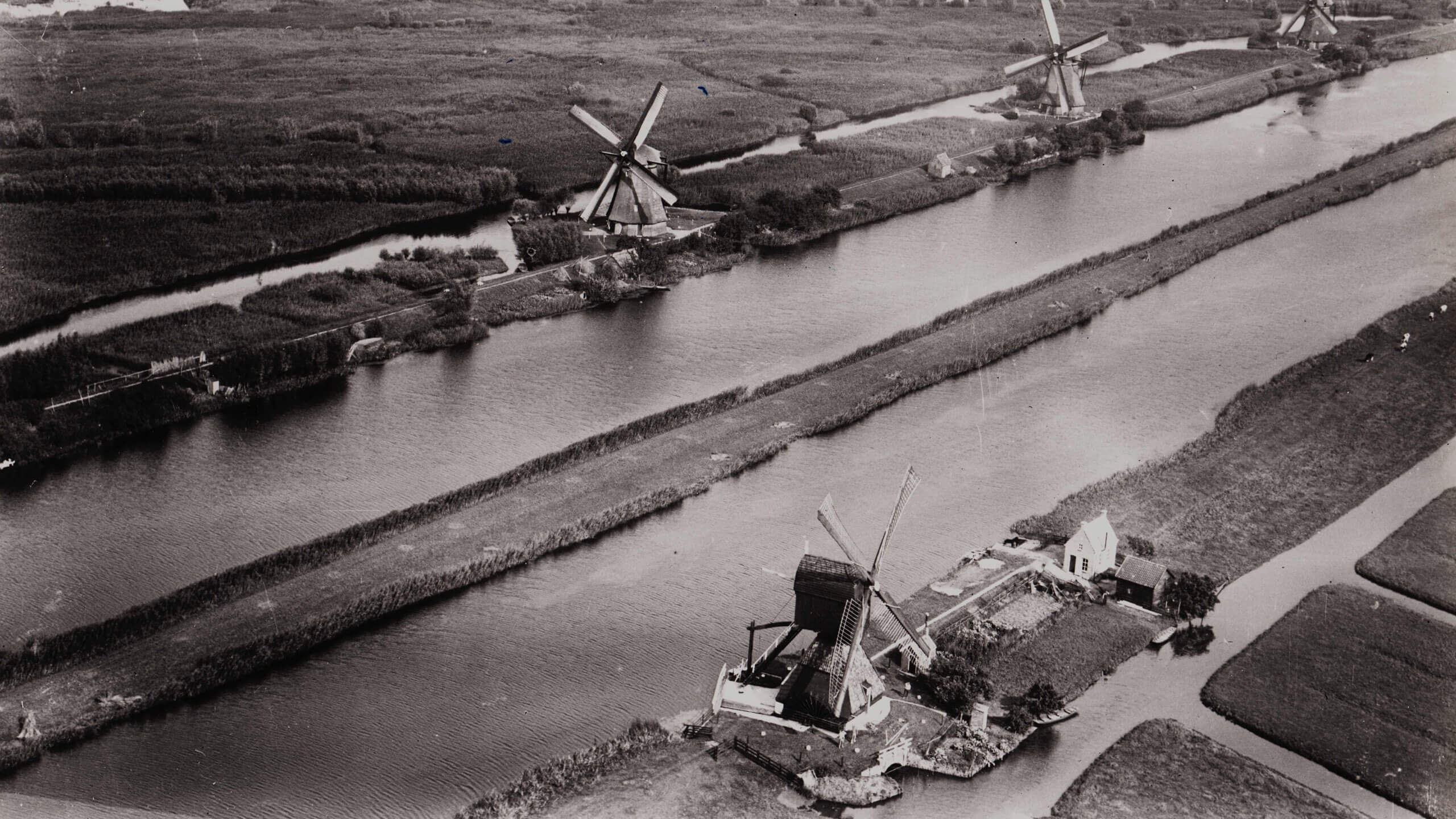
Kinderdijk lies in the Alblasserwaaard region, a low-lying area with lots of polders. If too much rain fell, or if the water levels of the rivers rose too high, the countryside would flood, making it uninhabitable. However, the advance of windmills – and later, pumping stations – changed all that. In each polder, a system was constructed to pump the water away. If you order an admission ticket, you will have access to places where you can see this history play out before your eyes, places where amazing stories are brought to life.

Visitors walk along the Middelkade through Kinderdijk UNESCO World Heritage.

Nederwaard

The eight Nederwaard windmills were built in 1738. They stand in a staggered line across the landscape to allow each windmill to catch plenty of wind. The power they generate is used to pump the water into large storage basins, called boezems in Dutch. The water then flows from the basins into the river. It’s a clever system that has worked for centuries.

The windmills in Nederwaard are round on the inside, so finding furniture that fits is a bit of a challenge for the residents.

Pumping stations

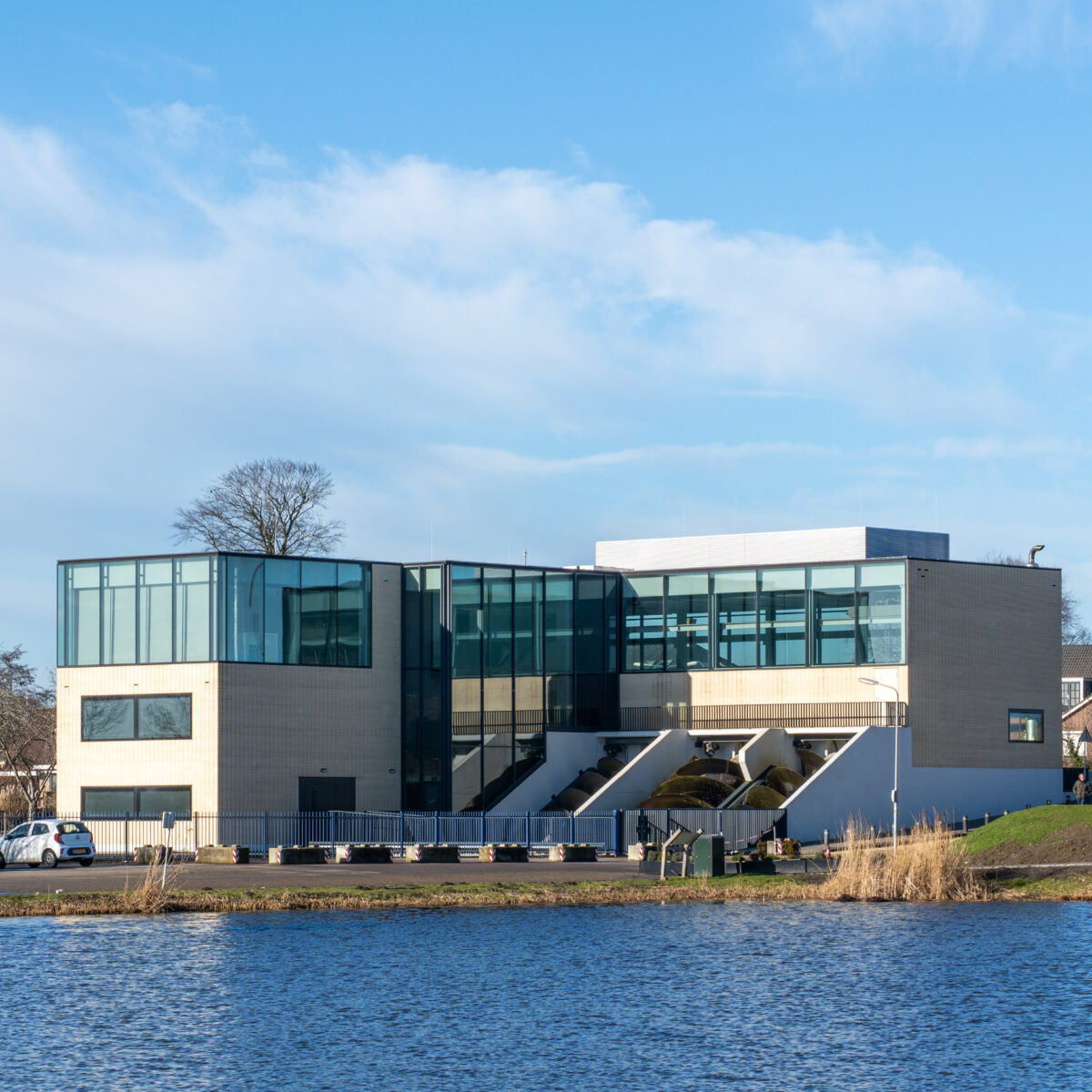
The windmills were good at their job, but if the rain was too heavy, they did not have enough power to pump it away. That’s why an additional resource was built in 1868: Van Haaften Pumping Station. Although it provided more power, it was fueled by coal which was expensive and cumbersome. A switch to diesel fuel in 1918 made the work much more efficient. In 1972, a completely new pumping station was built on top of it: J.U. Smit Pumping Station. The building’s façade was sustainably renovated in 2023 and the pumping station is now fully operated by electricity. You can still see it in action when you visit Kinderdijk.
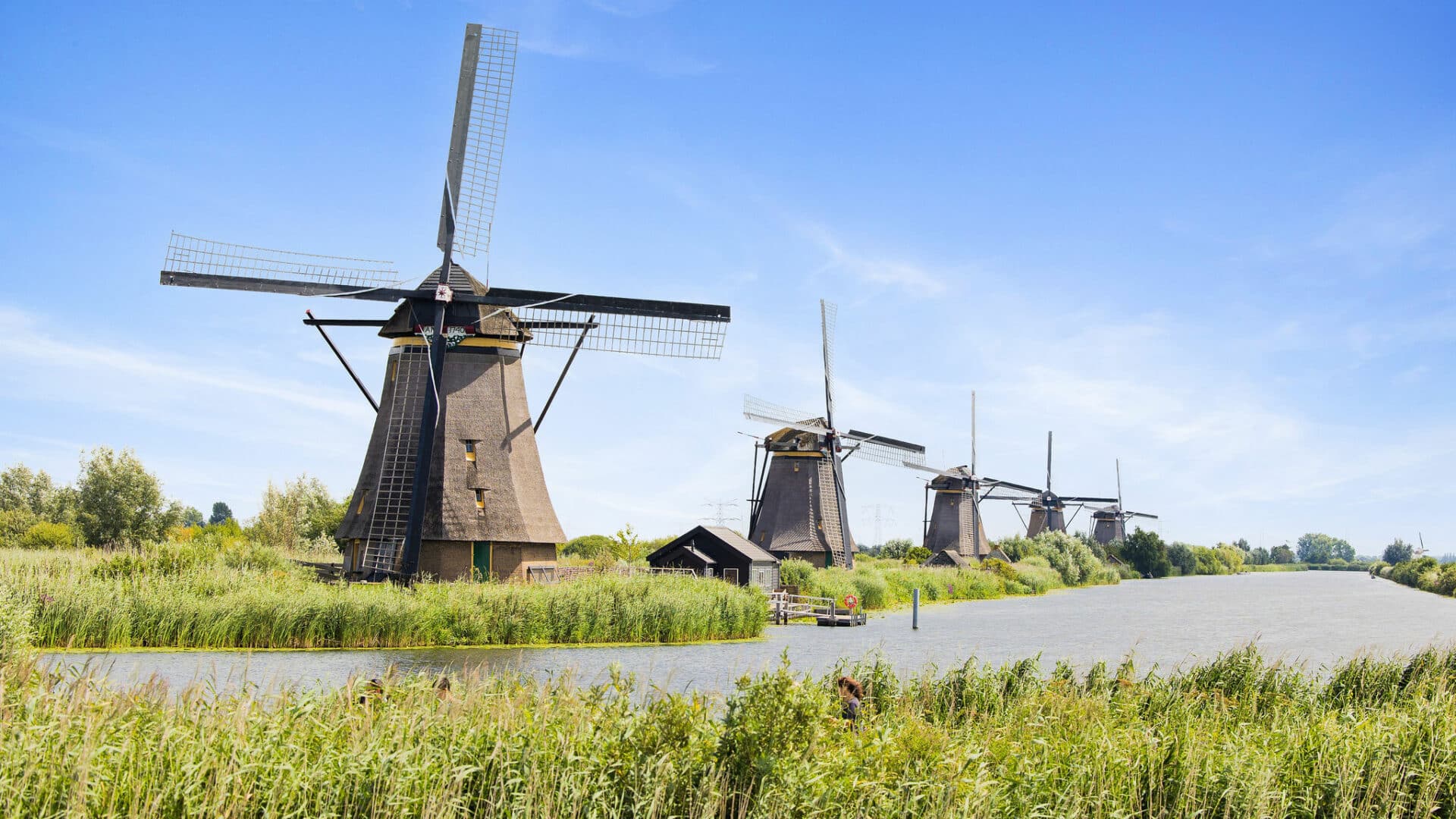
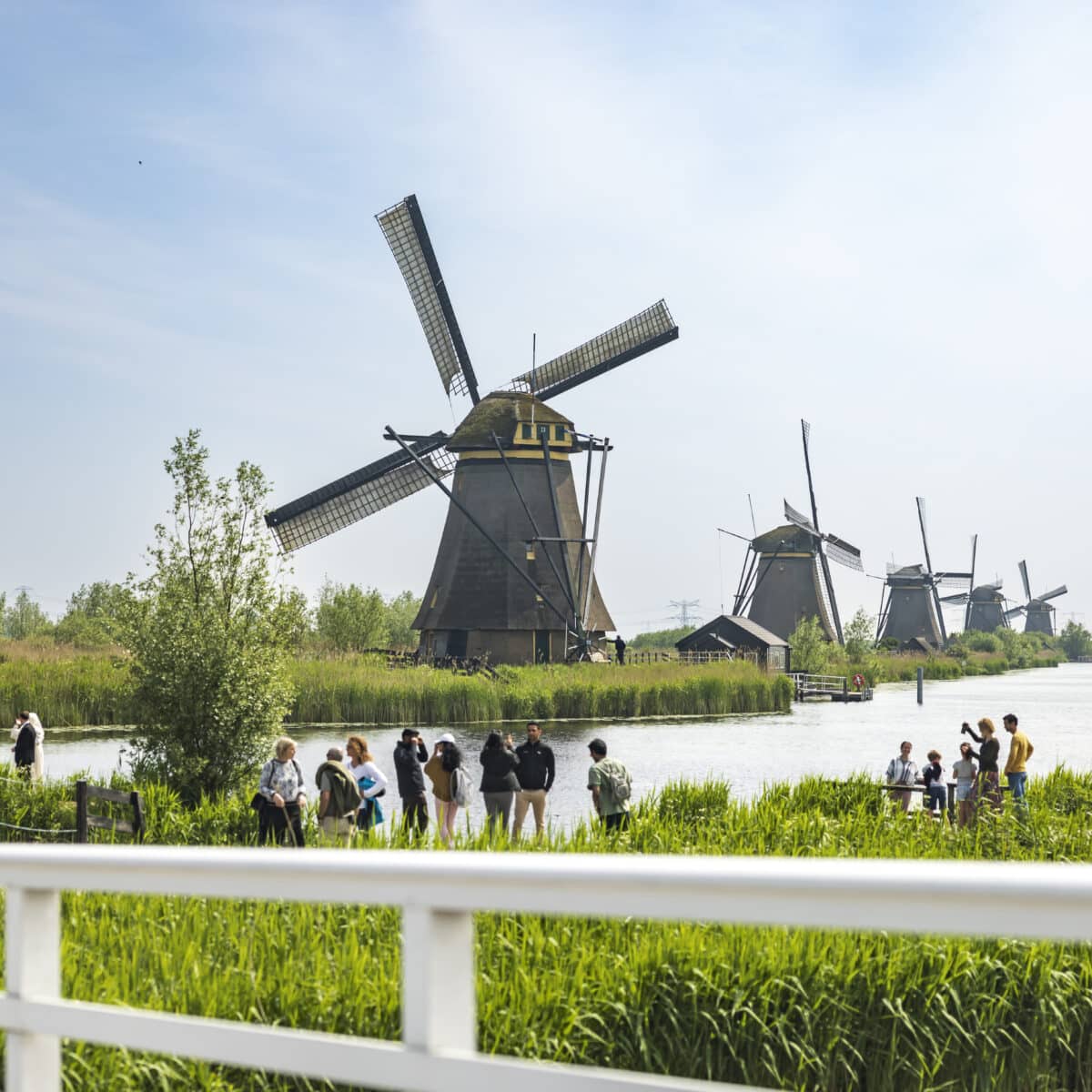
From the bridge, you look out over the famous row of windmills in Kinderdijk.

Overwaard

There are eight windmills in Overwaard too. But, unlike the ones in Nederwaard, they stand in a straight line, because the embankment is narrower: there was not enough room to stagger them. The windmills are built completely of wood and covered with thatch, making them lighter – a important aspect for structures on soil that is subject to subsidence. Subsidence is the reason for the sturdy driven piles used for the construction that followed in 1740.

Visit the Wisboom Pumping Station

In 1868, Wisboom Pumping Station was built to help the windmills pump away water in very wet periods. However, steam power was expensive and, in 1924, this pumping station was converted into an electric one. Nowadays, all the work is done by Kok Pumping Station, which still pumps away thousands of liters of water a day to keep the Netherlands dry.

Wisboom Pumping Station has been preserved and is open to the public. You can find out how water management at Kinderdijk works, inspect a large scale model, play the interactive windmill game and listen to stories in the old-fashioned telephone cabinets.

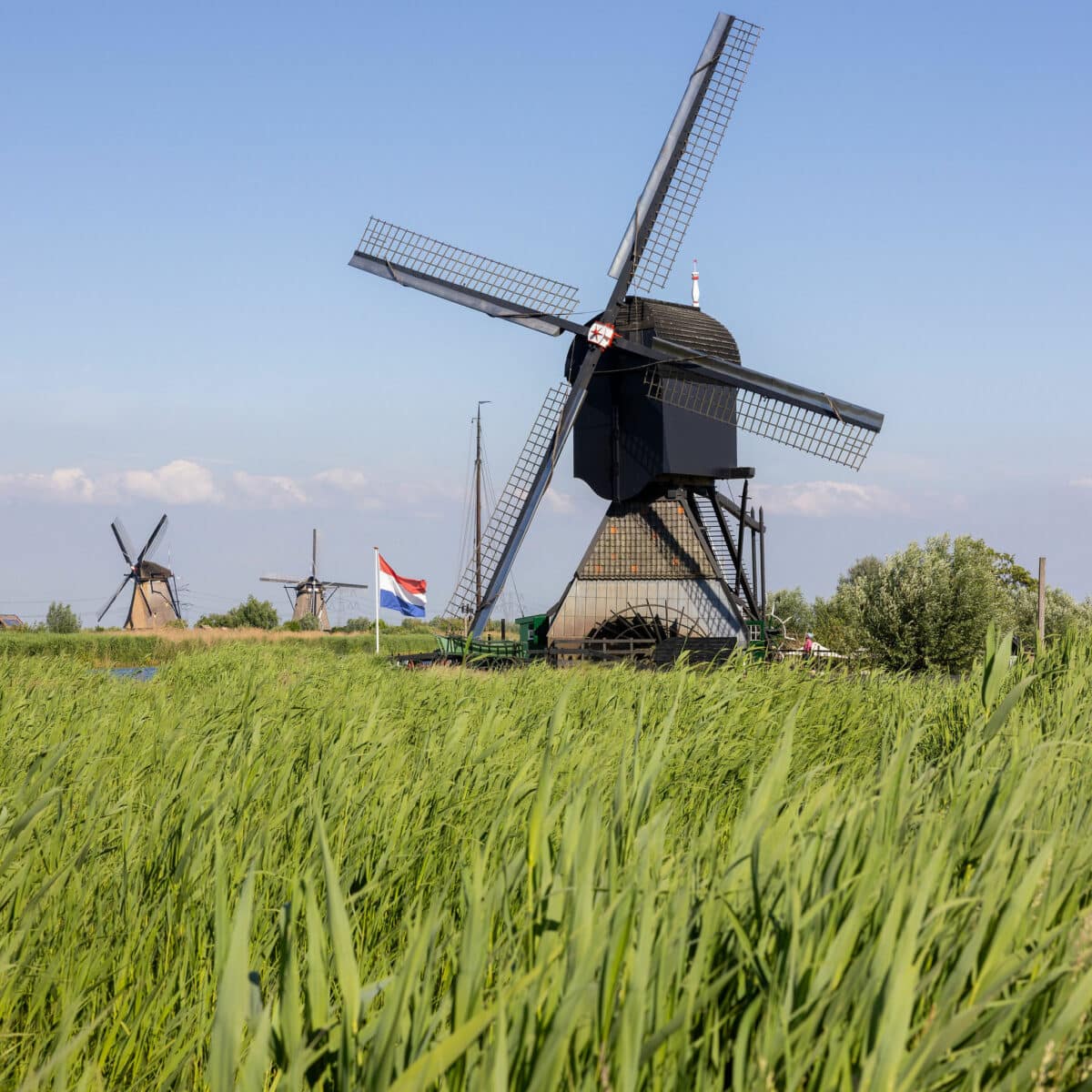
In the foreground is the Blokweer Museum Mill with reeds in front of it. Next to the mill, a Dutch flag is fluttering, and in the background several other windmills in Kinderdijk can be seen.

Blokweer Polder

The oldest windmill of the entire series is the windmill in Blokweer Polder. This model dates from 1500 and looks quite different to the other windmills. The bottom part looks quite like a pyramid with a house with sails on top that can revolve 360 degrees. Its construction is precisely what makes it difficult to work with. The house alone weighs 30,000 kilograms, twice as much as the cap on the other windmills. It’s small wonder that the people eventually switched to a new model.

Come and see Blokweer Museum Mill for yourself.

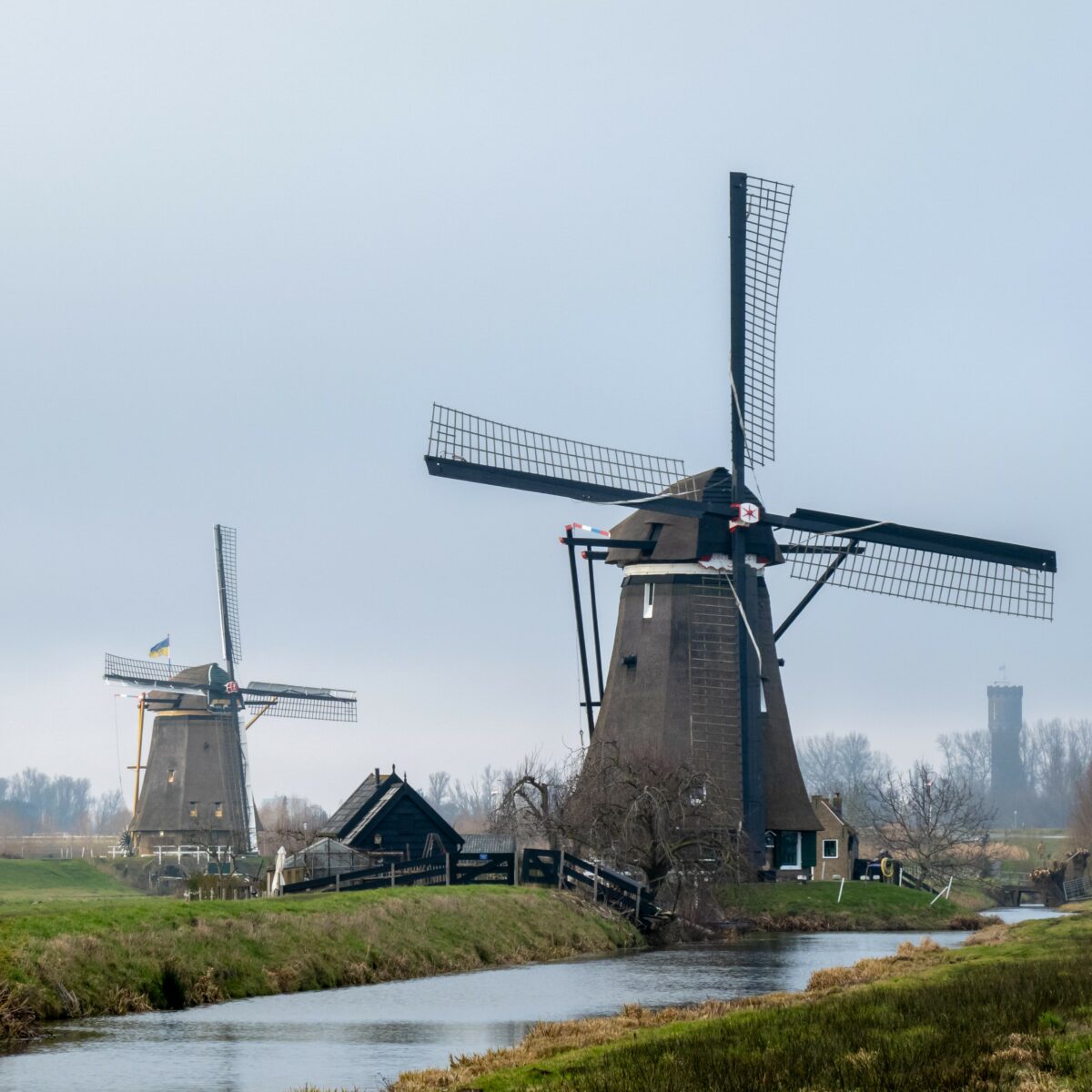
The 'Lage' and 'Hoge' Windmill of Nieuw-Lekkerland, part of the UNESCO World Heritage Site of Kinderdijk.

Nieuw-Lekkerland Polder

Nieuw-Lekkerland Polder is distinct from the other polders; it has the same water management system as the ones in the Overwaard and Nederwaard, but on a smaller scale. Three windmills would pump the water away with a scoop wheel. In 1958, the Oude Molen (Old Windmill) was demolished and eight years after that, De Hoge Molen (Tall Windmill) was equipped with an Archimedean screw, an exceptionally large screw; it is the only windmill with one of these screws and it can pump farther than those with a scoop wheel.

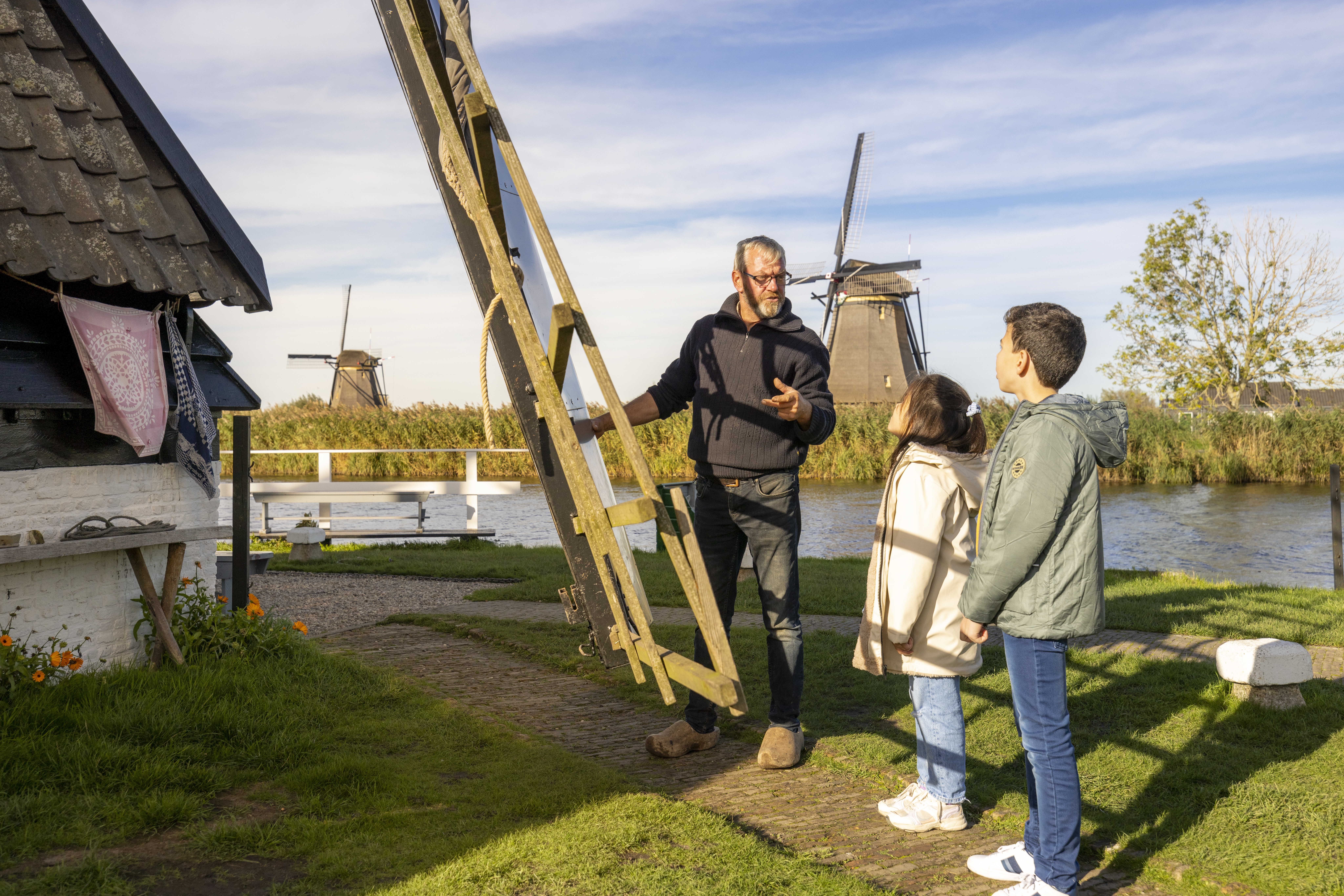
A miller is giving an explanation at Museum Mill Blokweer to two curious children.

Discover the different sorts of windmills and pumping stations at Kinderdijk.