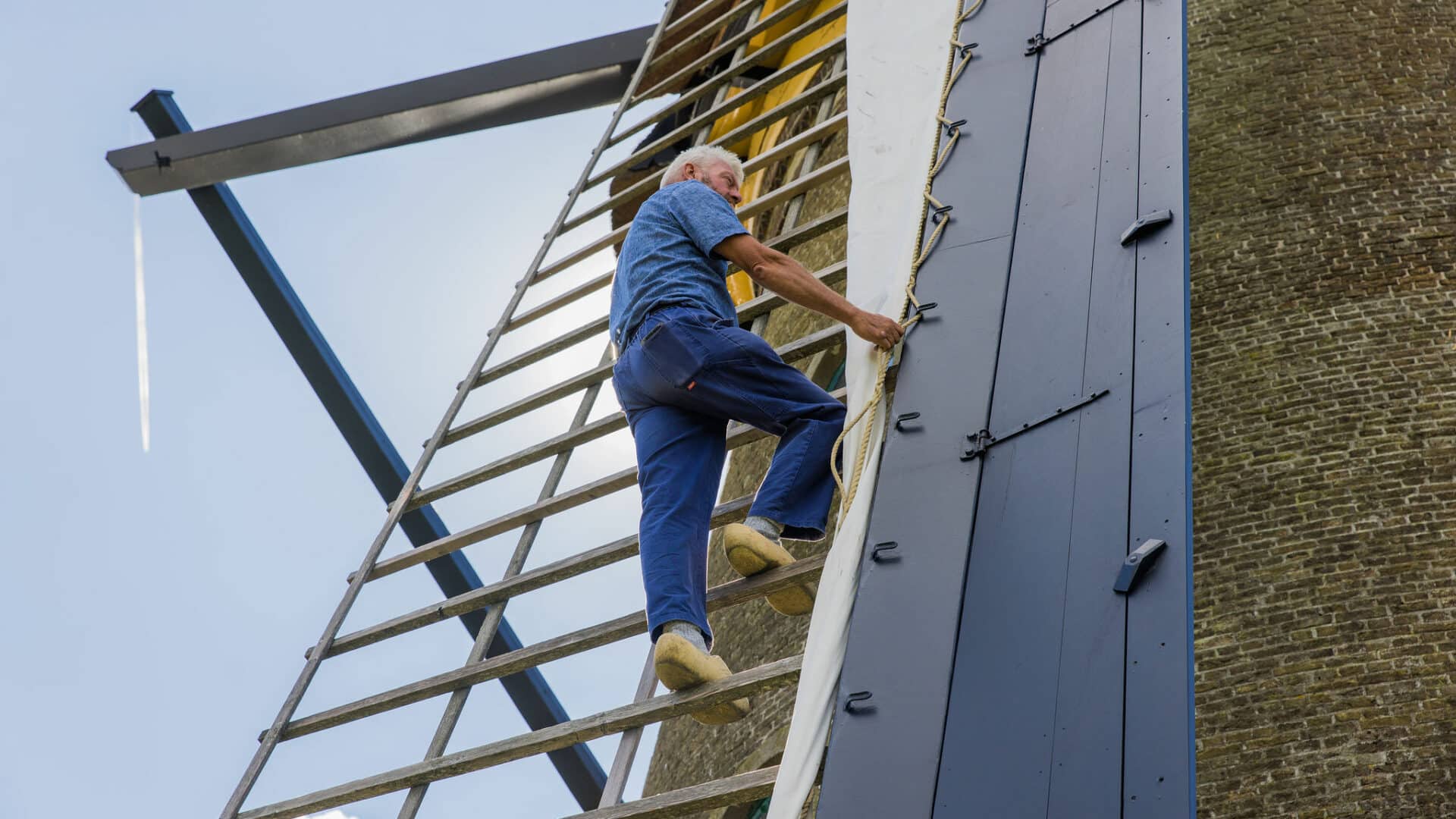
A miller wearing wooden clogs standing in the sails of the museum windmill in Kinderdijk.
Master craftsmen of the wind

Millers

A windmill can’t be operated by pushing buttons. Millers are craftsmen who work with the forces of nature. They feel the wind, read the sky, and know exactly when they need to step in. After all, the windmill will only pump most effectively if the miller acts on time.

One with nature

Wind is crucial to for the windmills to work. That’s why millers always watch the sky: what are the weather forecasts? They turn the windmill’s cap the right way so the sails can catch the wind, climb into the sails to rig them (if the wind dies down) and take up the brake. Now they’re ready to pump water!


The weather here in the Netherlands is very unpredictable. That’s why the millers never leave their windmills while they are pumping water. What if the wind changes? Then the millers must remove the canvas from the sails. When the cuckoo calls, they know rain is coming and it’s time to get to work again. As you can see, they are busy in and around the yard all day.
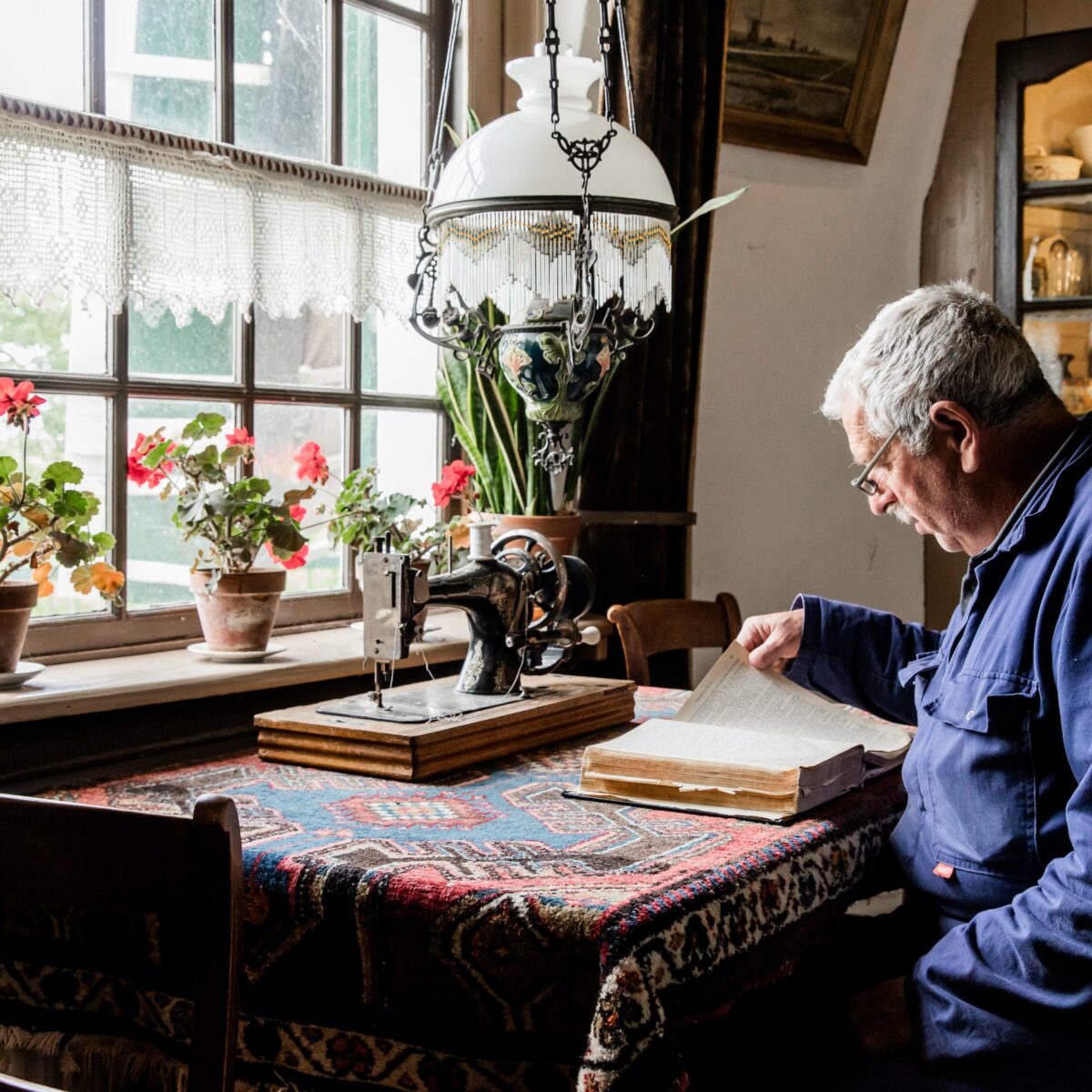
A miller is reading a book in the living room of the Nederwaard Museum Mill.

Meet Miller Cornelis van den Berg

Cornelis van den Berg has been a miller at Kinderdijk for over forty years. “When I was six, I could see the windmills from my classroom window. They fascinated me. It’s a dream come true to live and work here. I have all the fun and freedom of living in the countryside, with my vegetable patch, the birds, surrounded by nature. I’m happiest when the windmill is pumping well, the sun is shining, and the wind is blowing: Then I like to watch my wife with the grandchildren swimming together in the storage basin, the large pool of water right next to the windmill where we pump the excess water to, and I know life is good!”

Keeping the windmill in good condition

Our millers know exactly what they’re doing. They feel responsible for their windmill and the yard. The safety of the people around the windmill is the main priority: the windmill can only operate if all is safe. The millers know exactly what jobs need doing: they tend the vegetable patch and look after the animals. And they work with contractors to maintain everything properly, down to the last detail: the joinery, the paintwork, and all sorts of other jobs.


The craft of miller is so unique, it is listed as UNESCO World Heritage.


However, that was not always the case

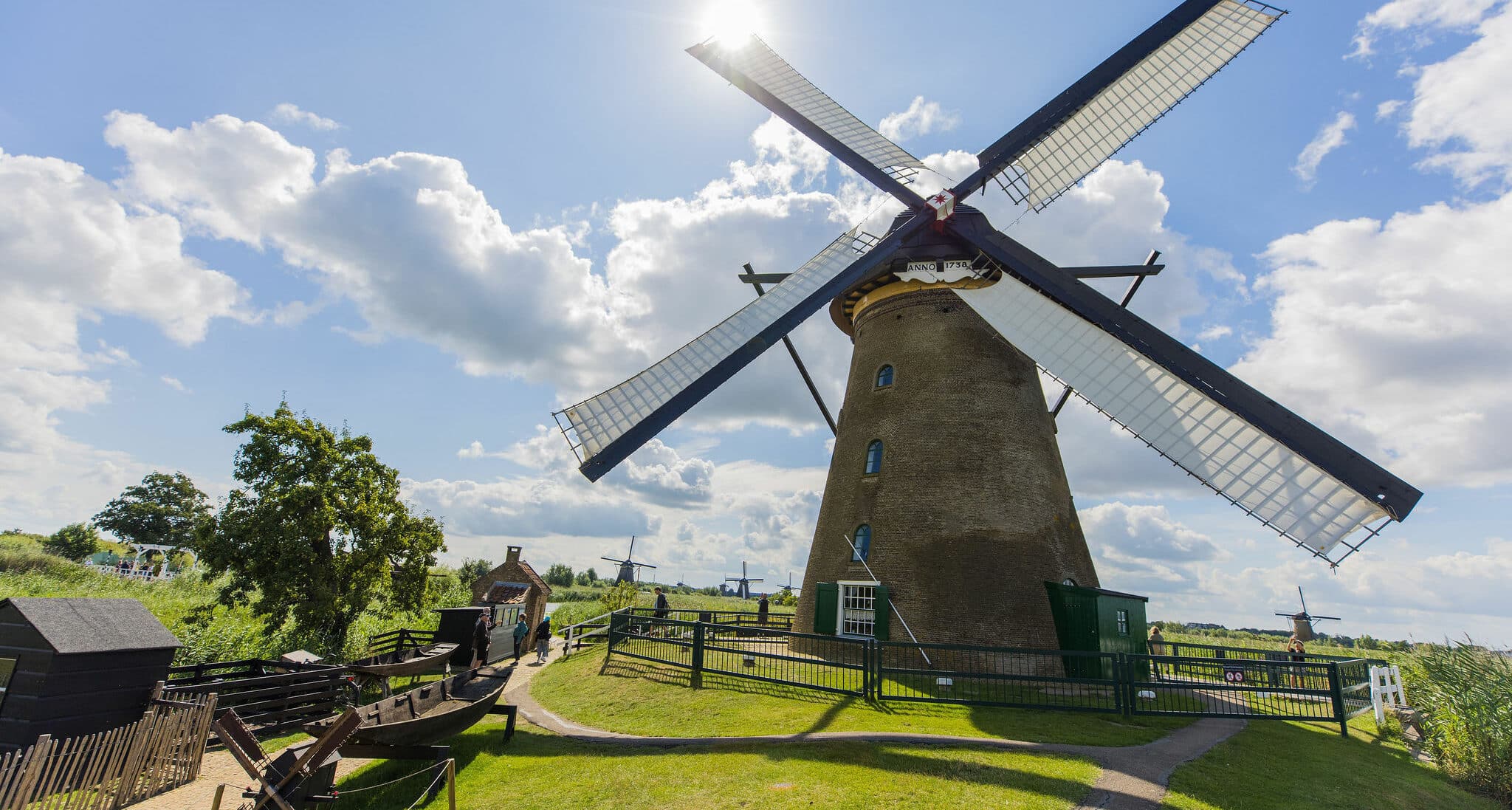
The windmills were built in 1738. Life in the mill and its yard in those days was completely different. The windmills did not turn to amuse passers-by, but to keep the land dry – an essential, and tough, job. If it rained at night, the millers had to be up at the crack of dawn to turn the windmills to catch the wind. Their work was poorly paid, and they tried to make a bit more money in other ways. In Kinderdijk, you can learn what the millers did to support their families.

Come and experience the life of a miller in the eighteenth century.