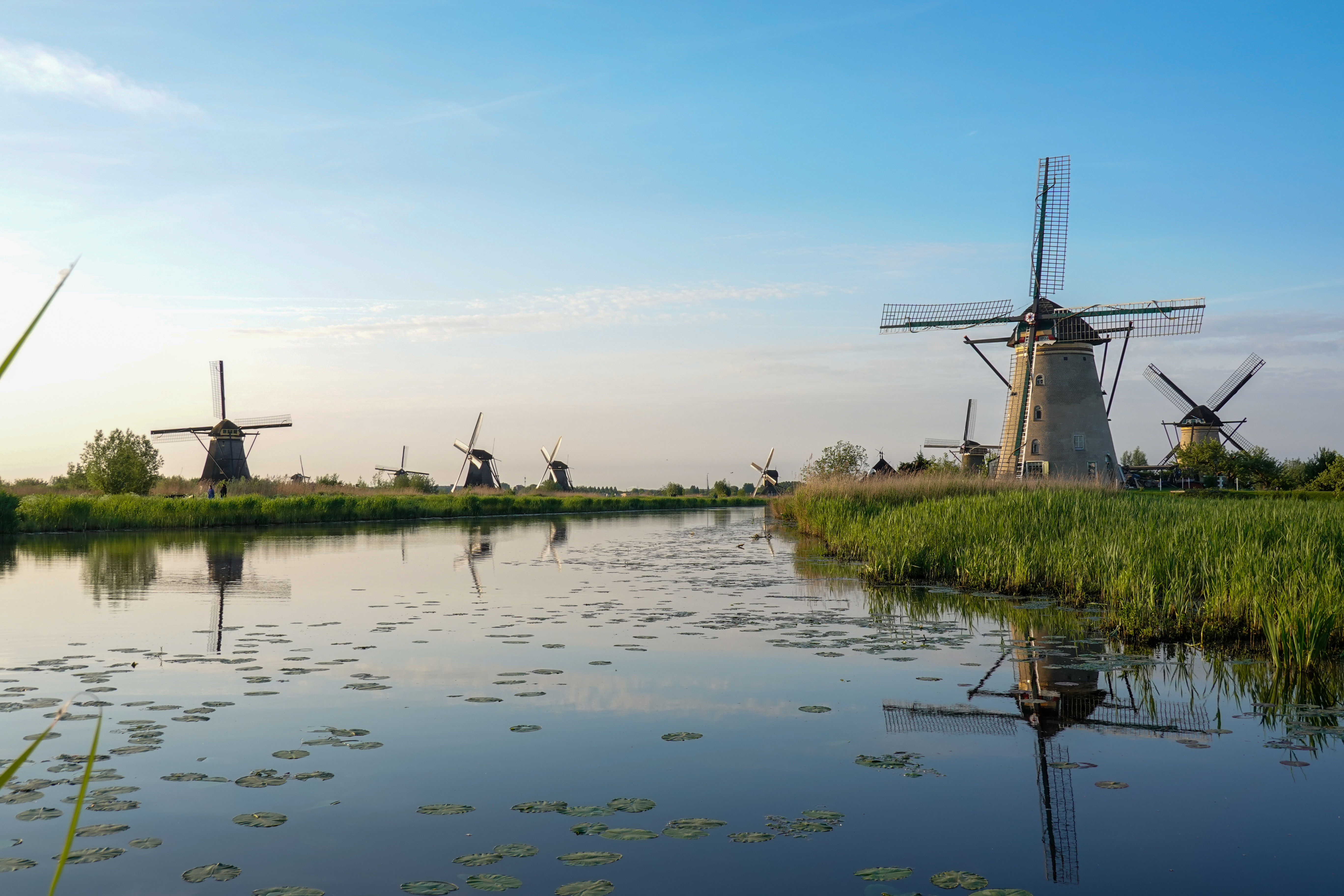
Where man and water join forces

Water management in Kinderdijk

Kinderdijk is not a scene from a history book: it’s a living landscape, in which you can see how the Netherlands has learnt to live with, and survive, the water. Now a world-famous windmill area, this place started out as a wet, uninhabitable, peat bog. Without smart solutions, cooperation and perseverance, this area would have been reclaimed by the water long ago.

Dry feet in a wet country

We don’t live on top of a mountain – we’re in a valley here. Water always flows to the lowest point and that’s Kinderdijk. The only way to keep the water out is by clever water management.


That’s why people constructed windmills, dug ditches, installed sluices, and built dams: all that work was needed to control the water. But the risk of flooding never completely vanished: rain, rivers, and rising sea levels have always posed a threat. That’s why water management in the Netherlands is never a one-time project, but a centuries-long struggle. And here in Kinderdijk, you can see exactly how this battle was fought – and indeed continues still.
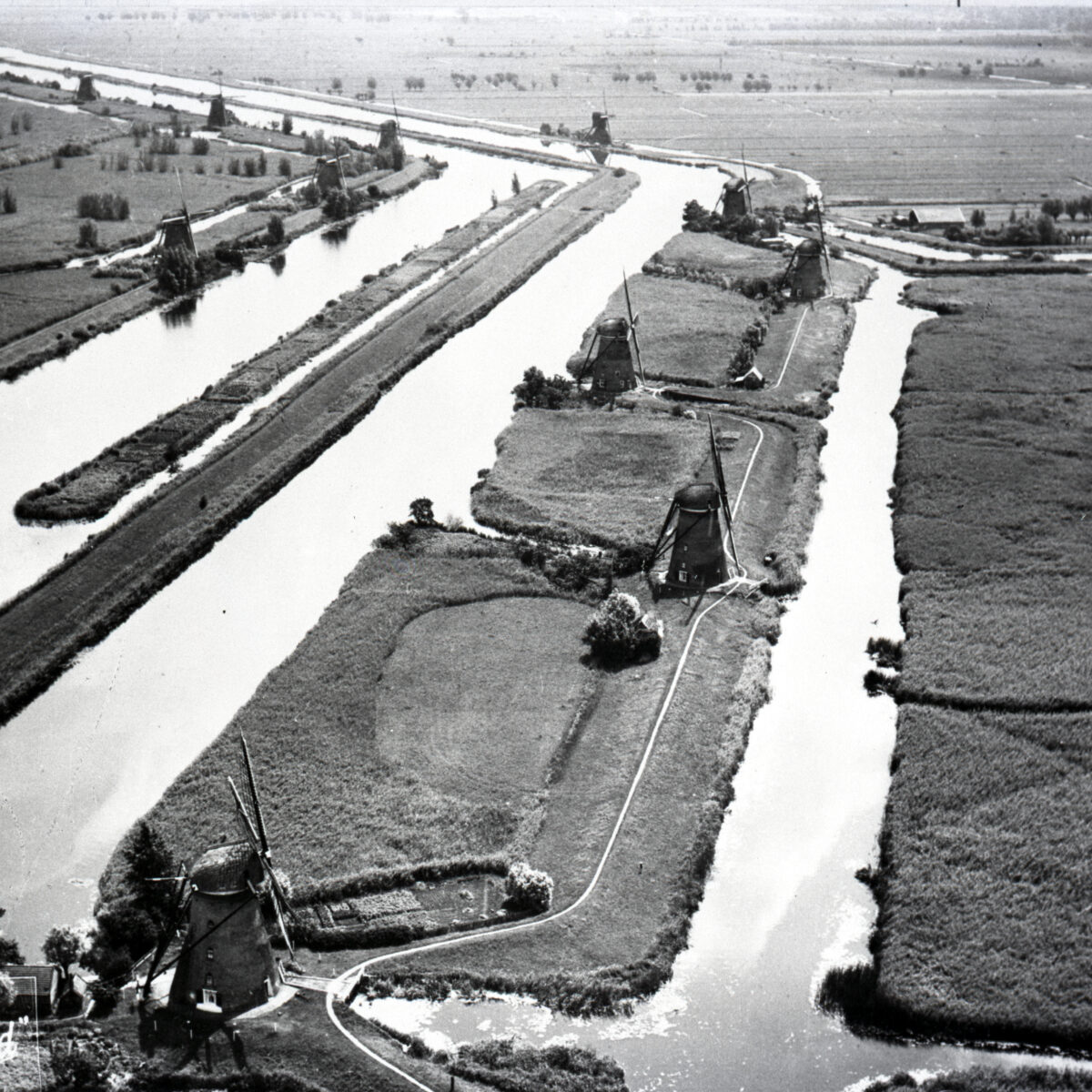
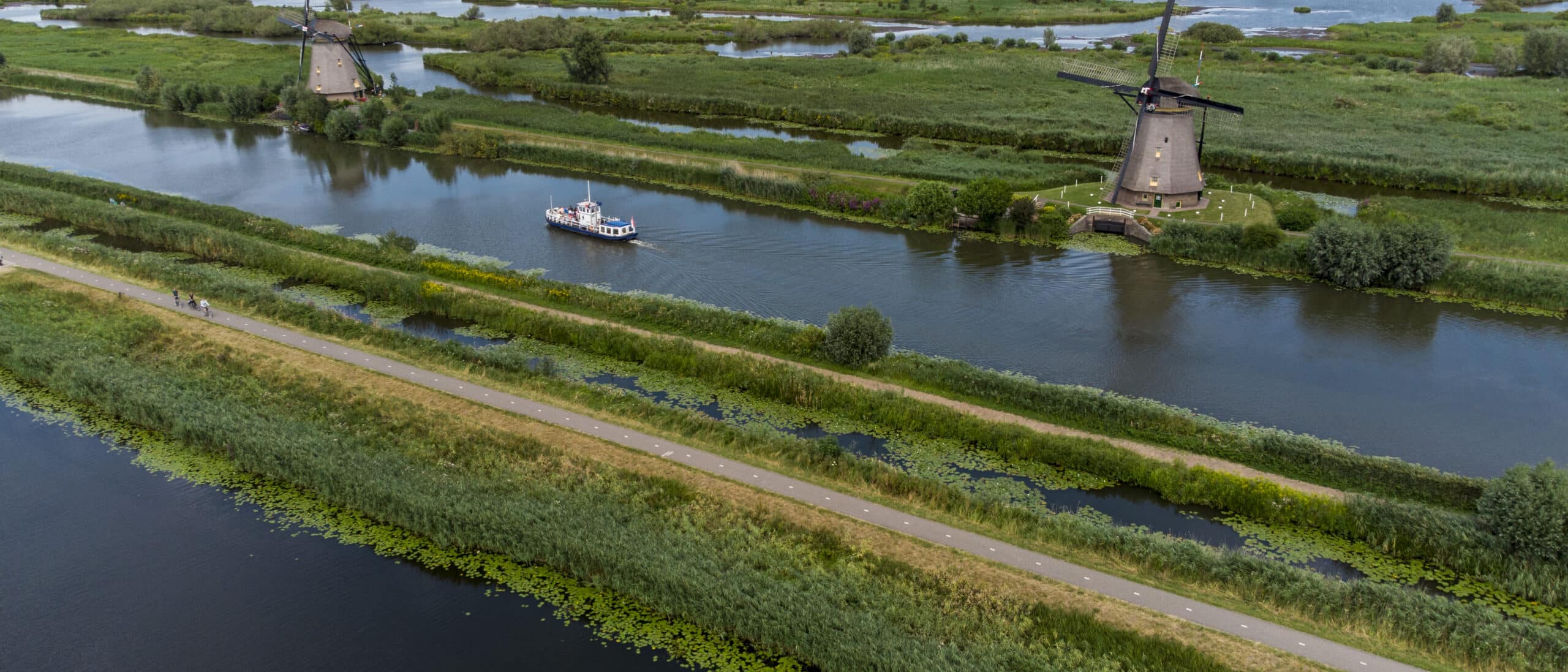
An aerial photo from Kinderdijk, dated from 1369

From Disaster to Unity

But technology alone was not always enough. The water still returned without warning, impacting whole villages. Farmers lost their land; villages were inundated, and people had to rebuild their lives time and again.

So, how did they solve it? By working together. In 1277, Count Floris V succeeded in uniting the lords of Alblasserwaard, compelling them to join forces to control the water. His decision led to the creation of the first water authorities, a form of democratic collaboration that eventually became the foundations for the country of the Netherlands as we know it today.

Without the water authorities, Kinderdijk would now just be a large lake.


The power of a polder

Water management is all about balance: it’s not simply just pumping the water away; it’s keeping the water levels right in all seasons. In Kinderdijk, you can see it in practice: the pumping station starts to work when the water levels are high, the storage basins collect the surplus water which is then transported to the river in a carefully regulated way. During dry periods, water is let in to maintain the levels and keep the soil moist. It is a finely tuned interplay of technology and nature working with man and machines.


As you can see, the windmills of Kinderdijk are not simply pretty scenery, but the workhorses of past eras that are still fully operational. They are part of a water management system that is still used today, with modern pumping stations.


It looks like a picture postcard, but it’s a centuries-old defense system.


Global water management vs. Kinderdijk

UNESCO regards the Kinderdijk water management system not only as a technological highlight but also as an example to other countries. The way the water is regulated and the way this area is governed has been copied and adapted in many places beyond the Netherlands, particularly in regions where water is very problematic.


Today, Kinderdijk remains relevant as a source of inspiration: this area demonstrates how people have adjusted to the water situation down the ages. The methods used here to deal with irregular water levels, subsidence, and rising sea levels have shaped Kinderdijk into an informative environment for issues related to climate adaptation. Ancient knowledge meets current challenges – and nowhere is that more perceptible than here.


Would you like to see, with your own eyes, how the Dutch outsmart the water?