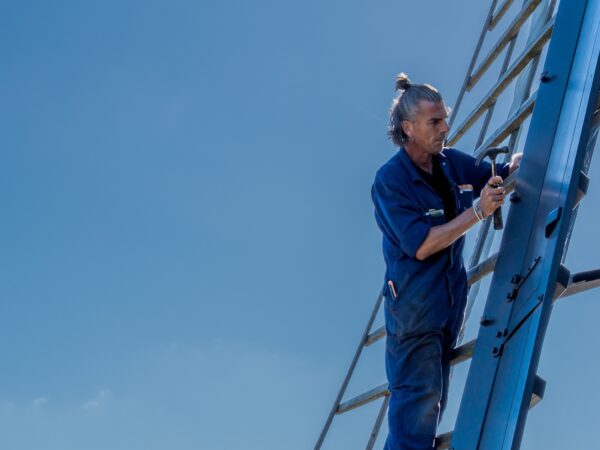
Preservation starts with proper maintenance
No mortar joint left untouched
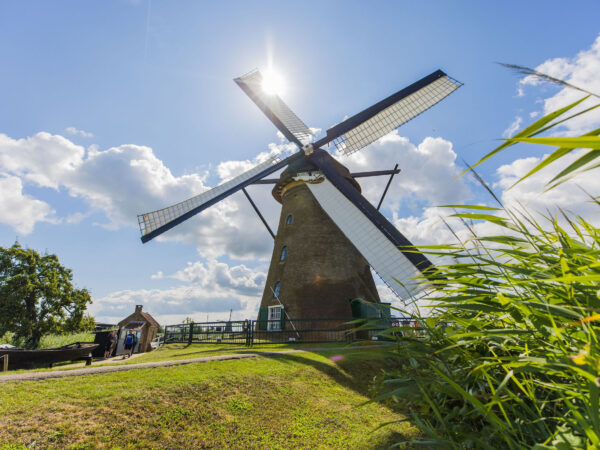
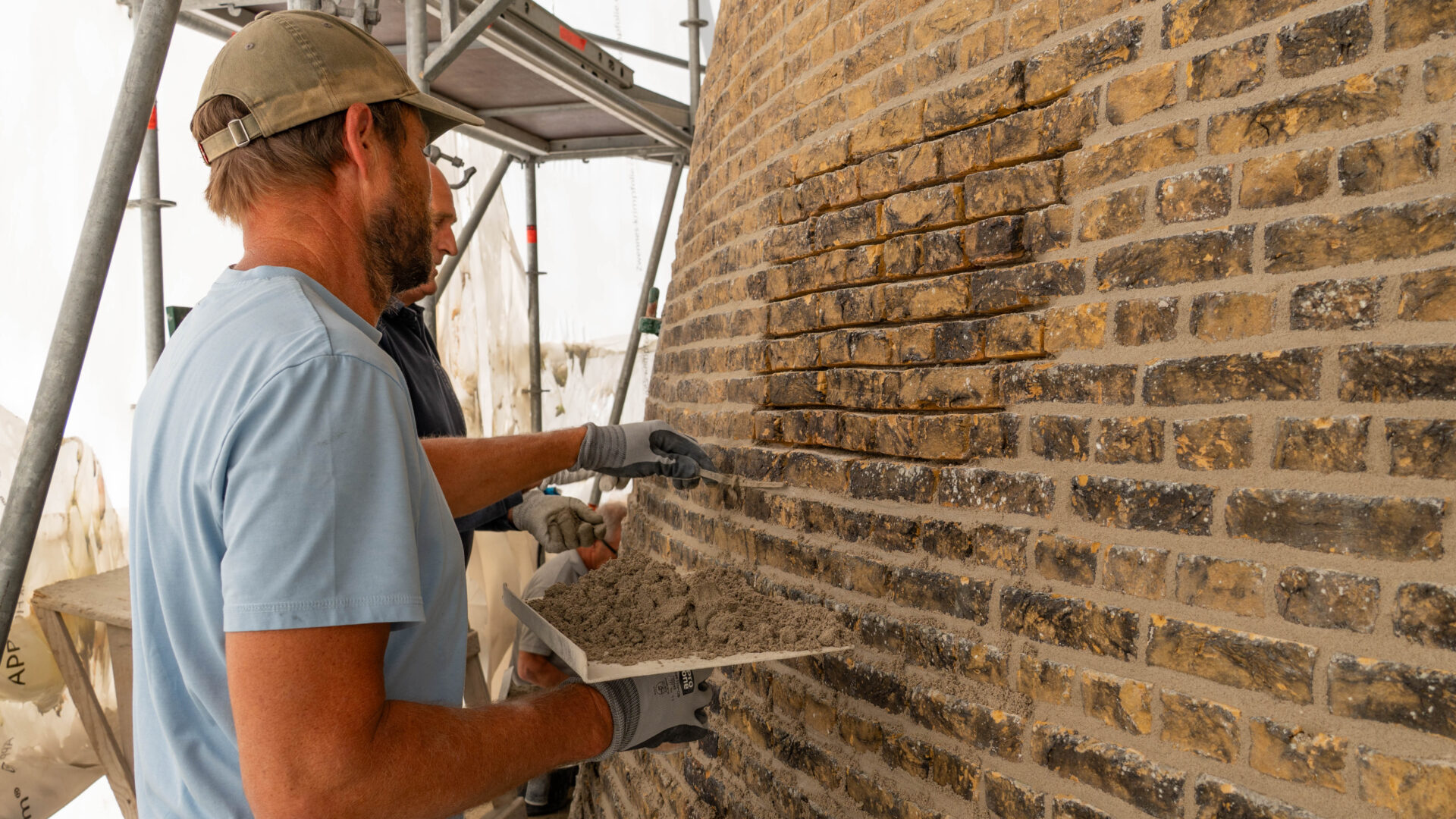
The masonry of Nederwaard Mill No. 5 has undergone extensive restoration. Around 45 to 50 square meters of brickwork has been completely rebuilt. In other areas, damaged bricks have been replaced and the existing mortar joints have been fully removed and repointed. It may sound like standard masonry work, but restoring a historic monument requires a very different approach. New sections should never look too perfect against a centuries old wall.
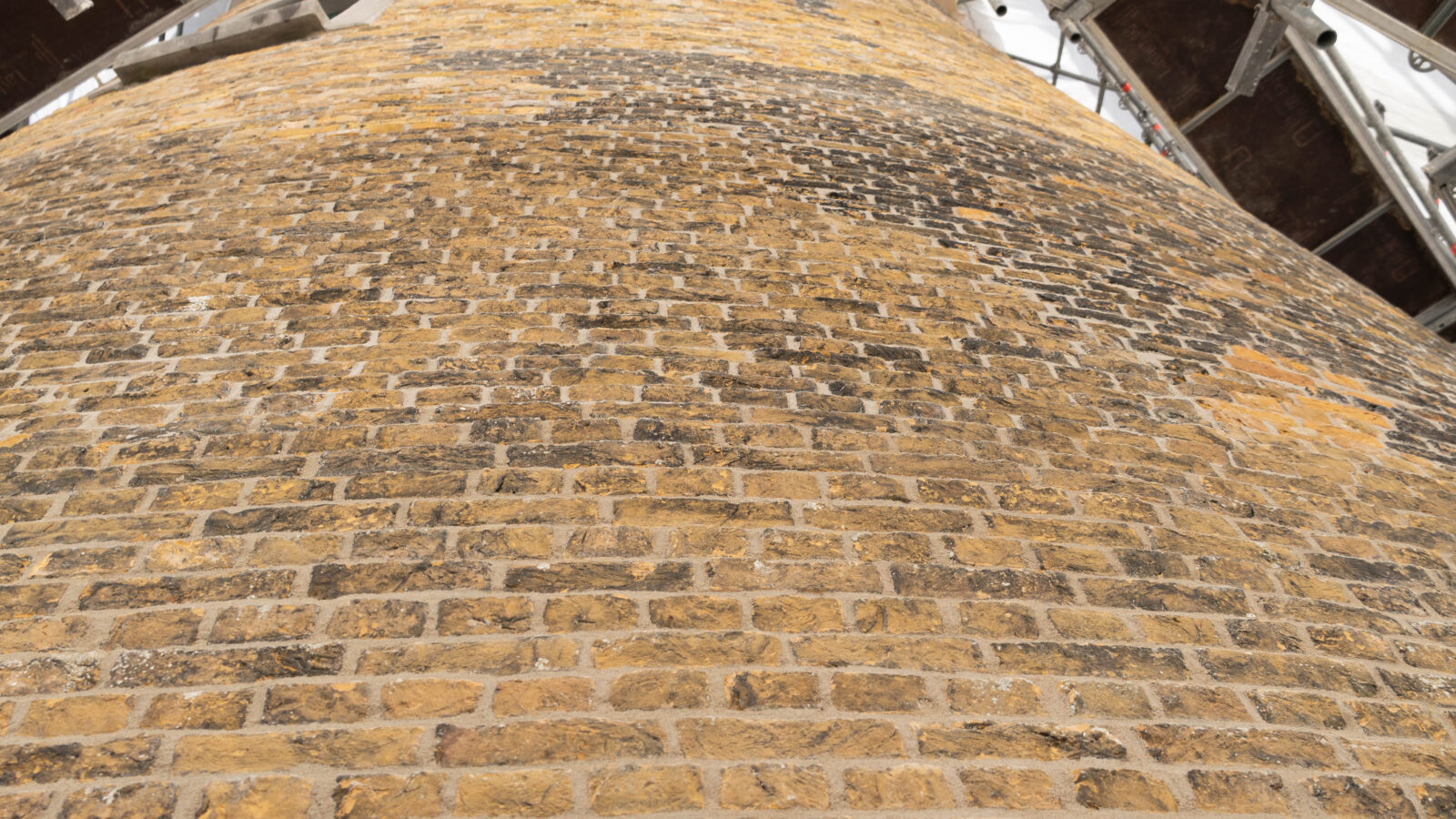
Take a closer look at the mill’s exterior and you’ll notice subtle bulges in the brickwork. These date back centuries to when the mill was first built. At the time, masons could only build part of the wall at once. They used lime mortar, which dried very slowly. Around the floor levels, this sometimes caused the masonry to settle and bulge slightly. During restoration, these irregularities are deliberately recreated. A perfectly straight wall would actually look out of place here. The goal is not to make the mill look brand new, but to preserve its historic character.
“If a restoration is done well, you can barely tell what’s new”
Old bricks get a new life
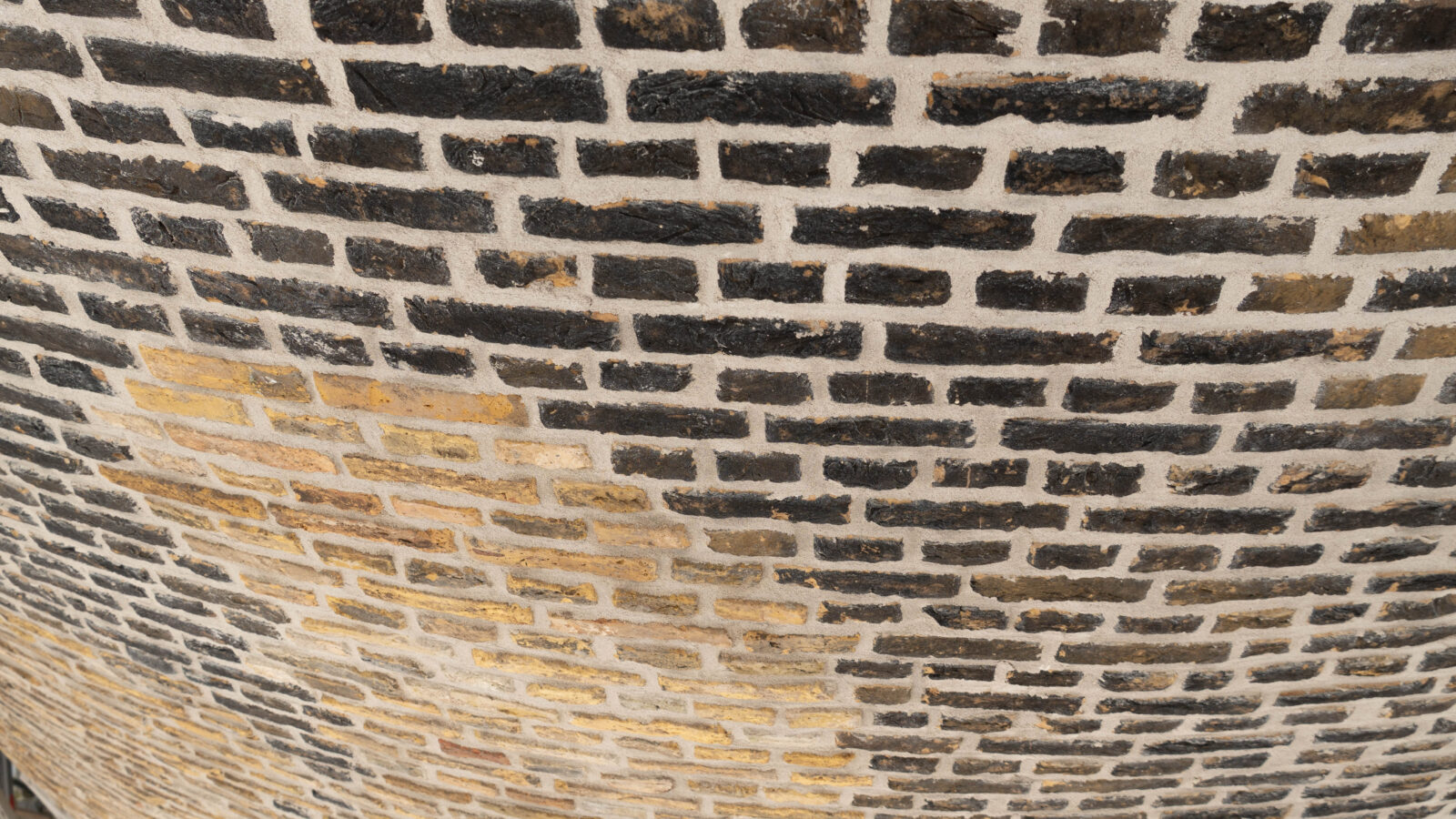
Some bricks need to be replaced entirely. Finding replacements means looking for bricks that match the size and appearance of the original masonry. For this restoration, suitable bricks were sourced all the way from Friesland. These historic nineteenth century bricks came from demolished farmhouses. Bricks of the same size were once produced in places including Dordrecht. Now, materials with a long history of their own are finding a new home in a historic monument.
Immediately after the replacement bricks are installed, the difference can sometimes be easy to spot. The new additions may look more yellow than the existing brickwork, for example. Over time, these differences will gradually become less noticeable.
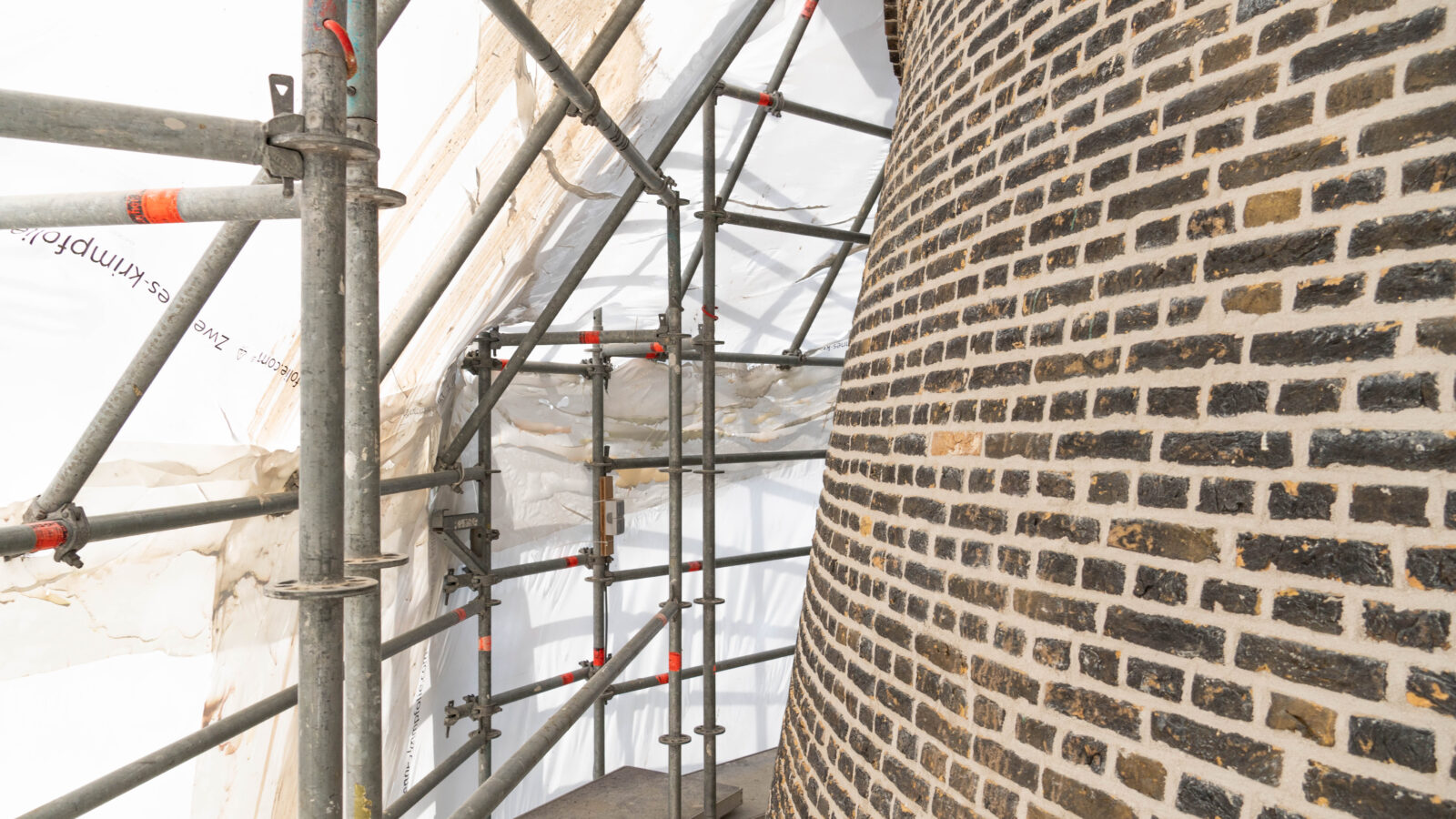
A newly repointed windmill is kept continuously wet
Hydraulic lime is used for the repointing. This material needs to dry slowly in order to cure properly. If it dries too quickly, it can affect the quality of the work. That is why the windmill is regularly sprayed with water during this phase. The craftsmen even return on weekends to keep the masonry wet.
Temperature also plays an important role. Once it drops to around five degrees Celsius or below, repointing work stops. Just one night of frost can be enough to damage freshly applied mortar. Maintaining a historic monument cannot simply be planned according to a schedule. The weather also determines what can and cannot be done.
Protection against moisture
Moisture was one of the main reasons the masonry needed attention in the first place. Once the restoration is complete, the windmill’s exterior will receive an additional treatment. After the masonry has dried completely, a protective coating made with beeswax will be applied next summer.
 A lost chimney returns
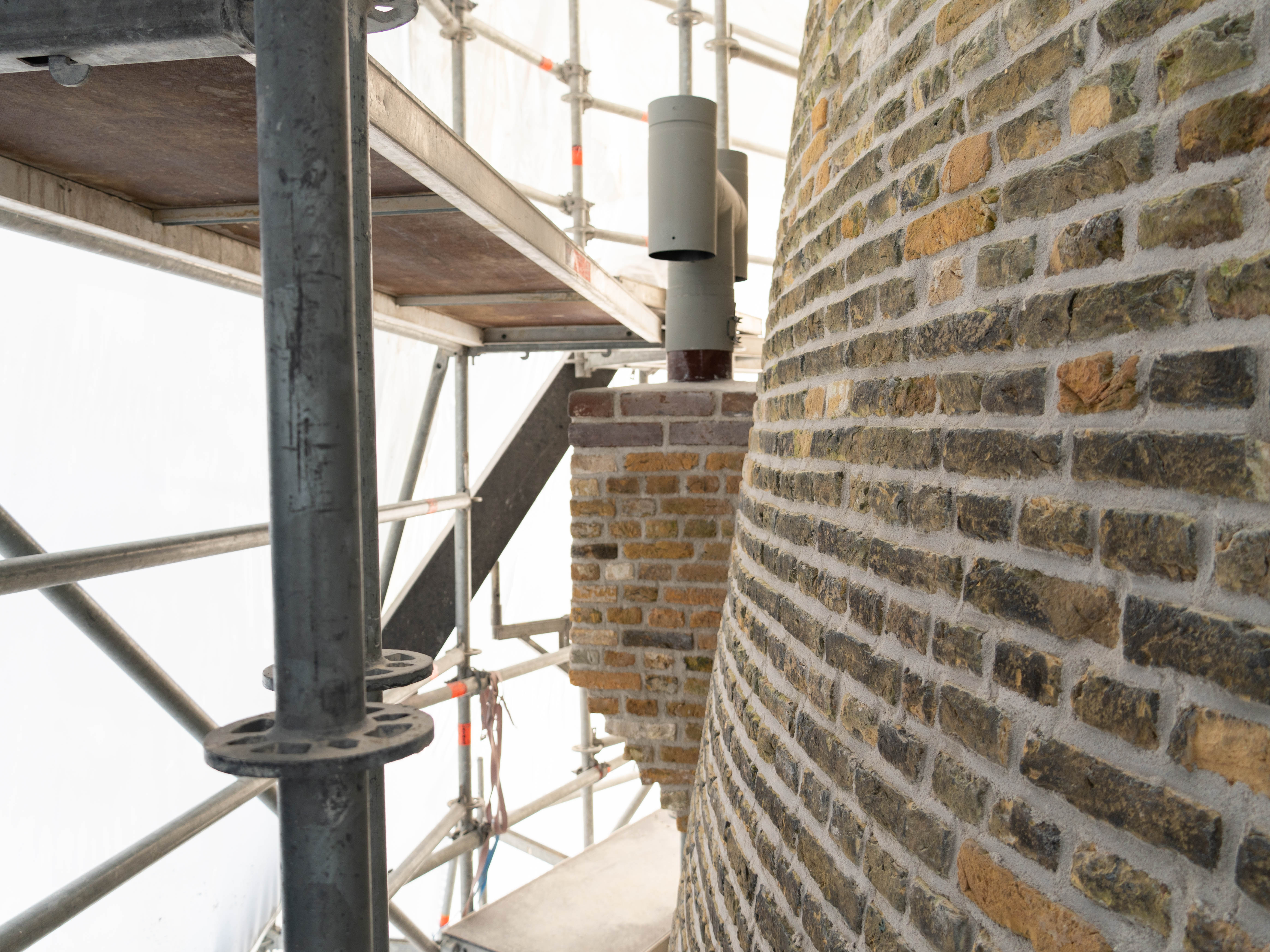
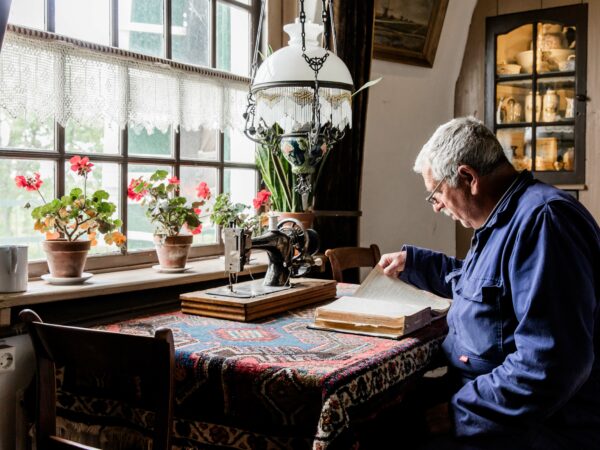
Old photographs revealed that the windmill once had a chimney. Using family photos as a reference, the chimney has now been reconstructed. Modern materials have been cleverly combined with its historic appearance. Where asbestos was once used, for example, there is now a safe stainless steel pipe. The exterior has been finished to match the original appearance as closely as possible. Mill resident Arie Hoek is extremely proud to see the chimney restored, especially because this is the only windmill in the Netherlands with one like it.
Old is allowed to look old
Restoration is not about making everything as straight, smooth and new as possible. Crooked lines, subtle bulges and variations in color are all part of a windmill’s age and history. Wherever original features can be preserved, they are. When replacement is necessary, materials and techniques are chosen that complement what has stood here for centuries.
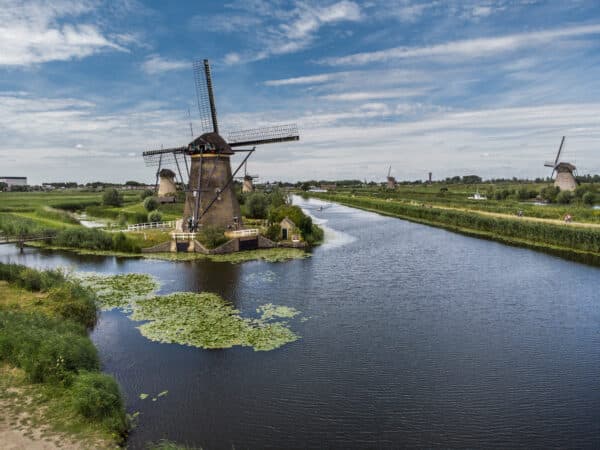
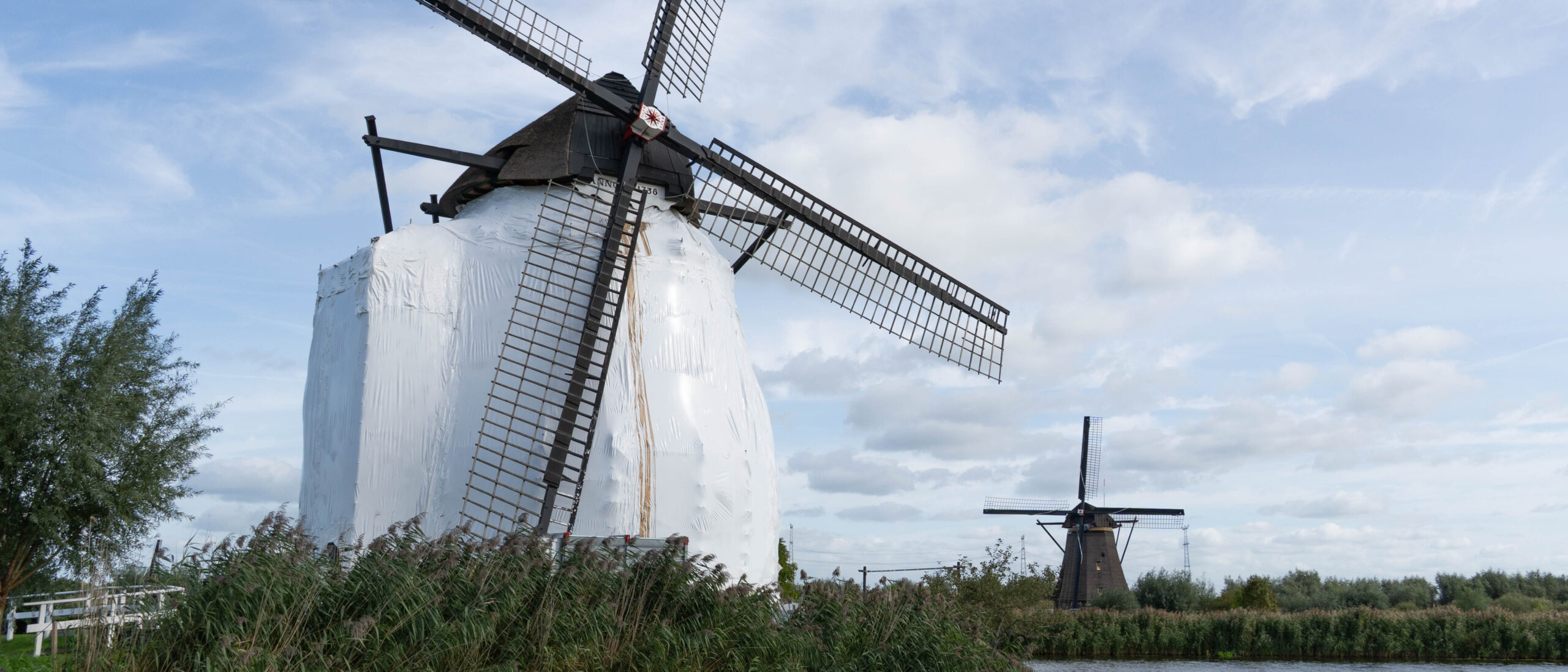
Preserving the windmills requires constant care, craftsmanship and financial resources. Revenue from tourism at Kinderdijk directly contributes to this work. By visiting Kinderdijk UNESCO World Heritage, you not only discover the story of Kinderdijk, but also help maintain and preserve this remarkable windmill landscape for future generations.
Want to do your part to help preserve our World Heritage Site?
Written by